


Understanding the Civil Aviation Safety Authority (CASA) Part 61 standards is the most critical step for any aspiring aviator before they begin flight training at Jandakot Airport. The regulatory framework governing CASA pilot licence requirements is designed to ensure safety and precision, yet the technical terminology often creates a barrier for those first entering the industry. It’s common to feel uncertain when trying to distinguish between the medical standards for a Private Pilot Licence (PPL) and the rigorous demands of a professional career track.
This guide provides a comprehensive reference to the Australian regulatory landscape, offering the clarity needed to plan your aviation career with confidence. We have compiled a precise checklist of the age, medical, and flight hour requirements for each licence tier, ensuring you have the facts required for a successful training outcome. You will gain a clear understanding of the logical progression from a Recreational Pilot Licence (RPL) to a Commercial Pilot Licence (CPL), alongside the specific benchmarks required to transition from a student pilot to a qualified professional in Western Australia.
Key Takeaways
- Identify the specific CASA pilot licence requirements for every training milestone, including age limits, medical standards, and minimum flight hours under Part 61.
- Distinguish between the operational privileges of a Recreational Pilot Licence and the cross-country navigation rights granted by a Private Pilot Licence.
- Review the regulatory pathway and technical benchmarks required to obtain a Commercial Pilot Licence for a professional aviation career.
- Understand the administrative steps necessary to begin training, such as applying for an Aviation Reference Number and obtaining the correct medical certification.
- Learn how structured flight training at a Part 141 or 142 organisation in Jandakot Airport ensures compliance with national safety standards.
Table of Contents
Private Pilot Licence (PPL) Standards and Cross-Country Navigation
Commercial Pilot Licence (CPL) and Professional Career Pathways
Understanding the CASA Part 61 Pilot Licensing Framework
The Civil Aviation Safety Authority (CASA) serves as the national regulator for all civil aviation activities in Australia. Its primary mandate is to maintain a safe aviation environment through the enforcement of the Civil Aviation Safety Regulations (CASR). Within this framework, Part 61 specifically dictates the standards for flight crew licensing. These regulations ensure that every pilot, whether flying for leisure or as a career, possesses the technical proficiency and theoretical knowledge required to operate safely in complex airspace.
Adhering to CASA pilot licence requirements isn’t just about regulatory compliance; it’s about establishing a foundation of professional discipline. At Jandakot Airport, Wingman Academies aligns its training syllabus directly with these Part 61 standards to ensure students are prepared for the realities of modern flight. This standardised approach creates a predictable safety outcome, allowing the Australian aviation industry to maintain its reputation for excellence on the global stage.
The Role of CASA in Australian Aviation
CASA acts as the gatekeeper of aviation safety by issuing licences and monitoring the performance of training providers. They oversee both Part 141 organisations, which provide non-integrated training, and Part 142 organisations, which handle integrated, high-capacity training. By conducting regular audits and flight tests, CASA ensures that the pilot licensing framework in Australia remains robust and fully compliant with International Civil Aviation Organization (ICAO) standards. This international alignment means your Australian qualifications are respected by aviation authorities worldwide.
The Progression of Pilot Licences
The journey through flight training is a logical sequence of increasing responsibility. Most students begin with the Recreational Pilot Licence (RPL), which allows for local flights in light aircraft. From there, pilots advance to the Private Pilot Licence (PPL) and eventually the Commercial Pilot Licence (CPL). Each stage adds new layers of complexity, such as cross-country navigation or advanced aircraft handling.
CASA utilises a competency-based training model. While there are specific minimum flight hour requirements for each licence tier, the focus remains on your ability to demonstrate mastery of the aircraft. Once you hold a base licence, you can add various ratings and endorsements. These might include:
Designated aircraft ratings for specific models or classes.
Operational endorsements such as aerobatics or night VFR.
Instrument ratings for flying in poor weather conditions.
This structured progression ensures that as you move toward a professional career in Perth, Western Australia, your skills grow in tandem with the regulatory demands of the industry. Every hour spent in the cockpit at Jandakot flight training is a step toward meeting these rigorous national standards.
Recreational Pilot Licence (RPL) Requirements
The Recreational Pilot Licence (RPL) serves as the first formal milestone for individuals commencing their flight training in Western Australia. Under the current CASA’s Recreational Pilot Licence requirements, an applicant must be at least 16 years old to hold the licence, although flight training can begin at a younger age. This qualification allows you to act as pilot in command of a single-engine aircraft with a maximum take-off weight (MTOW) of 1,500kg, providing a solid foundation for those aiming for higher certifications.
To meet the standards for an RPL, CASA mandates a minimum of 25 hours of flight time. This total must include at least 20 hours of dual instruction and 5 hours of solo flight time. Most students at Jandakot Airport find that achieving the required level of technical competency often requires additional hours beyond these regulatory minimums. Safety and precision remain the primary focus of any professional Part 141 training syllabus, ensuring that every hour in the cockpit contributes to a high standard of airmanship.
Holding an RPL allows you to carry passengers, provided you meet specific recent experience requirements. However, initial privileges are restricted to flying within a 25 nautical mile radius of your departure aerodrome. To fly beyond this area or into controlled airspace, you must obtain specific endorsements. These limitations ensure that novice pilots gain sufficient experience in local operations before managing the complexities of cross-country navigation.
RPL Aeronautical Knowledge and Flight Training
Aspiring pilots must pass the RPL theory examination, which covers aerodynamics, aircraft systems, and flight rules. A pivotal moment in this phase is the First Solo, where the student operates the aircraft without an instructor for the first time. Following the completion of the prescribed syllabus, a practical flight test with a CASA-approved examiner is required to verify that the student meets all CASA pilot licence requirements for safe and disciplined operation.
Medical Standards for Recreational Pilots
Medical compliance is a non-negotiable aspect of Australian aviation. For the RPL, pilots can utilise the Recreational Aviation Medical Practitioner’s Certificate (RAMPC), which is assessed by a general practitioner based on modified heavy vehicle standards. Alternatively, holding a Class 2 medical certificate provides broader privileges and fewer operational restrictions. It’s vital to select the medical standard that aligns with your long-term aviation goals, especially if you intend to progress toward a Commercial Pilot Licence. For those ready to begin their training, enrolling in a structured Recreational Pilot Licence training course at Jandakot Airport ensures all regulatory benchmarks are met under expert mentorship.
Private Pilot Licence (PPL) Standards and Cross-Country Navigation
The Private Pilot Licence (PPL) represents the standard for aviators who intend to operate throughout Australia without the geographical limitations of a lower-tier certificate. While the CASA Recreational Pilot Licence (RPL) requirements focus on local proficiency, the PPL curriculum shifts the emphasis toward advanced cross-country navigation and complex airspace management. To hold this licence, an applicant must be at least 17 years of age and have completed a minimum of 40 hours of total flight time, or 35 hours if the training is conducted within an integrated course.
Specific CASA pilot licence requirements for the PPL dictate the composition of these flight hours. You must log at least 10 hours of solo flight time, which includes a minimum of 5 hours of solo cross-country navigation. This phase of training is designed to build the self-reliance and decision-making skills necessary for safe flight outside the immediate training area. Pilots learn to manage fuel, weather changes, and communication with air navigation service providers while operating independently. It’s a rigorous process that demands high levels of discipline and technical accuracy from the outset.
PPL Theory and Navigation Requirements
Candidates must pass the PPL theory examination (PPLA). This assessment tests knowledge in areas such as meteorology, navigation, and flight planning. Training at Jandakot Airport provides a distinct advantage in this regard. Operating within Perth’s controlled airspace requires precise radio navigation and dead reckoning skills. Students must demonstrate they can navigate using charts and physical landmarks while maintaining strict compliance with air traffic instructions. This disciplined approach ensures that graduates can safely integrate into any major secondary airport in Australia without hesitation.
Licence Privileges and Operational Flexibility
A PPL holder enjoys significantly greater operational freedom than an RPL holder. You can fly any aircraft within your category and class rating across the entire country. The 25 nautical mile restriction is removed. This allows for long-distance travel, interstate flights, and the carriage of more than one passenger in larger aircraft. For a detailed breakdown of the training syllabus and requirements, refer to the Private Pilot Licence Perth page. This qualification serves as the final step for private aviators or a critical bridge for those pursuing a professional career in the cockpit.

Commercial Pilot Licence (CPL) and Professional Career Pathways
The Commercial Pilot Licence (CPL) is the mandatory regulatory threshold for any pilot intending to engage in flight operations for remuneration. While the PPL focuses on private utility, the CPL demands a transition into a professional mindset where safety, efficiency, and technical precision are paramount. To meet CASA pilot licence requirements for a CPL, an applicant must be at least 18 years of age. Additionally, candidates must secure a Class 1 medical certificate. As of June 2026, an initial Class 1 medical examination is priced at $545, with an additional $75 CASA application processing fee. This medical standard is significantly more rigorous than the Class 2 requirements, involving comprehensive audiology and ECG assessments to ensure the candidate meets global airline health standards.
The flight hour requirements for the CPL vary depending on the structure of the training course. Pilots enrolled in a non-integrated training syllabus must log a minimum of 200 total flight hours. Conversely, those completing a Part 142 integrated course can achieve the licence in 150 hours. This condensed timeframe is permitted because the training follows a more intensive, supervised curriculum that mirrors the structured environment of a commercial airline. Regardless of the pathway, the focus at Jandakot Airport remains on developing the disciplined airmanship required to operate complex aircraft in high-density traffic areas.
CPL Theory Examinations and Practical Standards
Achieving a CPL requires passing seven separate theory examinations. These subjects include Aerodynamics, Aircraft General Knowledge, Flight Rules and Air Law, and Operation, Performance and Flight Planning. Each exam requires a deep technical understanding; for example, the CPL Operation, Performance and Flight Planning (CFPA) exam carries a CASA fee of approximately $203.39. Many students find these assessments challenging, which is why structured Ground Theory Courses are essential for ensuring a first-time pass. The subsequent flight test is conducted to a much higher standard of precision than the PPL, requiring the pilot to demonstrate mastery of the aircraft under various abnormal and emergency scenarios.
Preparing for an Airline Career
A CPL is the foundation, but moving into a multi-crew environment requires further specialised training. The Aviation Pathway at Wingman Academies is designed to bridge the gap between basic commercial manoeuvres and airline readiness. By training in Perth, Western Australia, students benefit from mentorship provided by former airline captains who instil the professional discipline expected by global carriers. This mentorship ensures that every student who completes their Commercial Pilot Licence Perth training is prepared for the technical and non-technical demands of a modern flight deck. To begin your professional progression, review our detailed CPL syllabus and training prerequisites.
Administrative and Medical Compliance: How to Start
Meeting the administrative CASA pilot licence requirements is the first practical step in your aviation career. Before you can log flight hours or sit theory examinations, you must establish a formal identity with the regulator. This process ensures that all subsequent training, medical assessments, and security clearances are accurately attributed to your professional record. Compliance is non-negotiable in a high-stakes environment like aviation.
Obtaining Your Aviation Reference Number (ARN)
The Aviation Reference Number (ARN) is a unique identifier used for all interactions with the Civil Aviation Safety Authority. You must apply for an ARN through the myCASA portal. This requires digital identity verification using standard documents such as an Australian passport, birth certificate, or citizenship certificate. It is a critical prerequisite to organise this number before your first flying lesson at Jandakot Airport, as it is required for your medical application and initial flight training records. Without an ARN, your training hours cannot be officially recognised by the authority.
CASA Medical Certificates and English Proficiency
Securing the correct medical certification is essential for operational safety. Private pilots typically require a Class 2 medical, which carries a CASA application fee of $65. Those pursuing a professional career must obtain a Class 1 medical, which involves a more comprehensive examination and a $75 CASA fee. You can locate a Designated Aviation Medical Examiner (DAME) in Perth to conduct these assessments. Additionally, all pilots must demonstrate English language proficiency to meet ICAO standards. This assessment confirms you can communicate clearly and effectively over the radio, which is vital for operating in controlled airspace.
Final Readiness Checklist
Before commencing a full training syllabus, ensure your regulatory paperwork is complete. This includes your ARN, medical certificate, and applying for an Aviation Security Identification Card (ASIC) if you intend to fly from security-controlled aerodromes like Jandakot. Use the following checklist to track your progress:
Apply for an Aviation Reference Number via myCASA.
Book a medical examination with a Perth-based DAME.
Complete an ICAO English language proficiency assessment.
Submit your ASIC application for airport security clearance.
A structured approach to these requirements prevents delays in your progression. Alongside meeting these regulatory prerequisites, understanding the full flight school Perth cost from RPL through to CPL will help you plan your financial commitment without unexpected shortfalls. We recommend booking a Trial Introductory Flight to assess your aptitude and discuss these prerequisites with a senior instructor. For professional guidance on the enrolment process and specific training pathways, Contact Wingman Academies to speak with our admissions team in Perth.
Establishing Your Professional Aviation Foundation
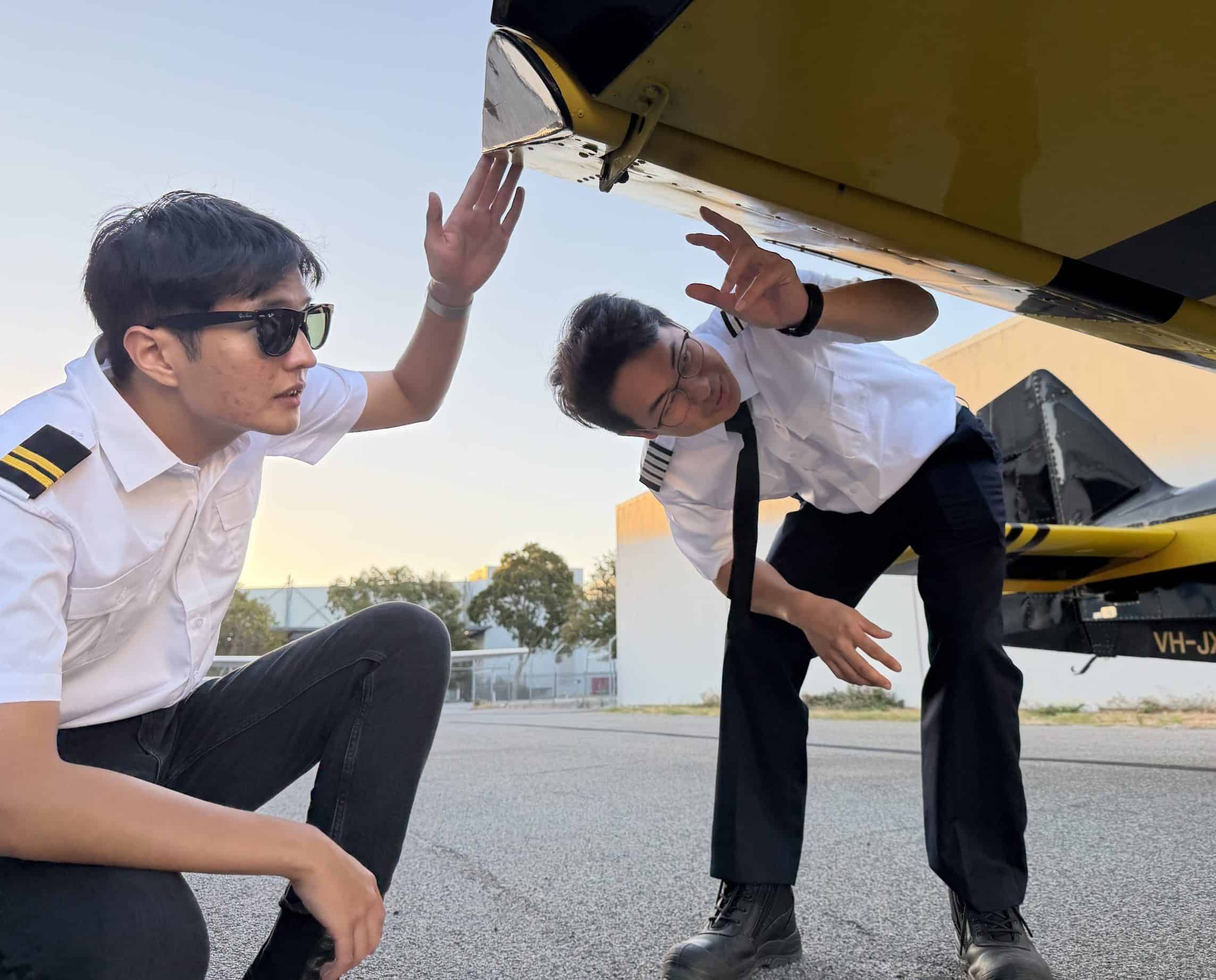
Navigating the pathway from a student pilot to a professional aviator requires a disciplined approach to regulatory compliance. This guide has outlined the essential progression from local recreational flying to the complex demands of a commercial career. By understanding the specific CASA pilot licence requirements, including medical standards and flight hour benchmarks, you can plan your training with technical precision. Success in this industry depends on a clear understanding of the standards set by the Civil Aviation Safety Authority.
Based at Jandakot Airport in Perth, Wingman Academies provides a CASA Part 141 approved environment where these standards are met with expert oversight. Our training is delivered by seasoned mentors, including former Cathay Pacific and Singapore Airlines captains, ensuring that your foundation is built on global airline standards. This high-level instruction prepares you for the technical rigours of the industry from your very first lesson.
The next step in your progression involves aligning these regulatory facts with your personal career goals. We invite you to consult with our Airline Captains on your training pathway to receive professional guidance tailored to your aspirations. We look forward to supporting your transition into the professional aviation community in Western Australia.
Frequently Asked Questions
What is the minimum age to start pilot training in Australia?
There is no regulatory minimum age to begin flight training in Australia, though legal age requirements apply to specific milestones. A student must be at least 15 years old to fly solo and 16 years old to hold a Recreational Pilot Licence. For those pursuing a Private Pilot Licence or Commercial Pilot Licence, the minimum ages are 17 and 18 respectively. Starting early allows students to build technical proficiency before reaching these licensing age brackets.
How many flight hours are required for a Private Pilot Licence (PPL)?
A Private Pilot Licence (PPL) requires a minimum of 40 hours of total flight time, or 35 hours if completed through a Part 142 integrated course. This total must include at least 10 hours of solo flight time, with 5 hours dedicated to solo cross-country navigation. Meeting these CASA pilot licence requirements ensures that a pilot has demonstrated the necessary competency to navigate safely across Australian airspace without geographical restrictions.
What is the difference between a Class 1 and Class 2 medical certificate?
The primary difference lies in the medical standards and the licence privileges they support. A Class 1 medical certificate is the professional standard required for Commercial Pilot Licence and Air Transport Pilot Licence holders. A Class 2 medical certificate is sufficient for private operations under a PPL. Class 1 examinations are more frequent and involve more rigorous testing, such as regular ECGs and audiology reports, to ensure long-term fitness for commercial flight duties.
Do I need to pass theory exams before I can start flying?
You don’t need to pass theory examinations before commencing initial flight training at Jandakot Airport. Practical flying lessons often occur concurrently with ground school to help students apply theoretical concepts in a cockpit environment. However, you must pass specific pre-solo and pre-area solo theory tests before flying alone. All relevant category theory exams must be successfully completed before you can sit the final flight test for any licence tier.
What is an Aviation Reference Number (ARN) and how do I get one?
An Aviation Reference Number (ARN) is a unique identifier issued by the Civil Aviation Safety Authority for all regulatory transactions. You obtain one by applying through the myCASA portal and providing proof of identity, such as an Australian passport or birth certificate. This number is essential for booking medical appointments, sitting theory exams, and recording flight training. It’s best to secure your ARN before your first lesson to ensure all records are correctly attributed.
Can I use a Recreational Pilot Licence (RPL) to fly for a career?
A Recreational Pilot Licence (RPL) cannot be used for a professional career as it doesn’t permit the holder to fly for remuneration. The RPL is designed for local, private flight operations in light aircraft. To work as a pilot and receive payment for flight duties, you must progress through the training pathway to obtain a Commercial Pilot Licence. The CPL involves more advanced training and higher medical standards to meet professional industry requirements.
How long does it take to complete the CASA pilot licence requirements?
The duration depends on training frequency and whether you choose an integrated or non-integrated pathway. A Private Pilot Licence typically takes six to twelve months of consistent training to achieve. A Commercial Pilot Licence generally requires twelve to twenty-four months of full-time study. Weather conditions in Perth and individual student aptitude also influence the timeline. Maintaining a steady schedule at a Part 141 organisation offering Jandakot flight training helps ensure you meet the CASA pilot licence requirements efficiently.
Are there specific English language requirements for pilots in Australia?
Yes, all pilots in Australia must demonstrate a specific level of English language proficiency to ensure safe radio communication. The minimum standard is ICAO Level 4, which assesses your ability to speak and understand English in both routine and non-routine aviation scenarios. This requirement applies to all licence holders, regardless of their background. Proficiency is typically assessed during your initial training or through a dedicated aviation English language evaluation.
How much does pilot training cost in Australia?
The total investment varies significantly depending on your chosen licence tier and training pathway. Understanding the full flight school Perth cost breakdown for 2026 — including aircraft hire rates, examiner fees, and ground theory expenses — is essential for accurate financial planning before you enrol.
Disclaimer
Information is provided as general guidance only. Please contact Wingman Academies for current course information, pricing and CASA requirements.