

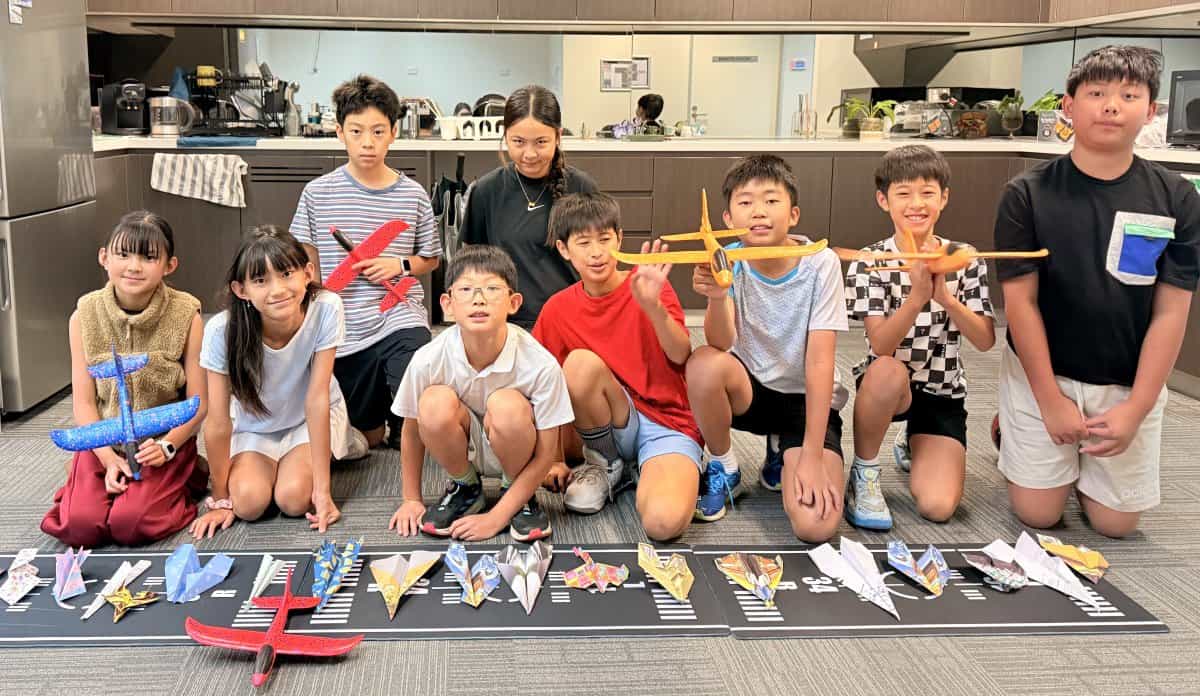
A school holiday program should be viewed as a professional induction rather than a seasonal distraction. For many aspiring pilots in Western Australia, the transition from curiosity to industry-standard training is often obscured by a lack of clarity regarding CASA age requirements and programs that offer little more than recreational joy flights. You likely recognise that a career in the cockpit requires more than a single afternoon in the air; it demands a structured introduction to the discipline of flight.
This guide provides a transparent roadmap for selecting an aviation school holiday program in Perth that prioritises technical standards and career progression. We will clarify the specific regulatory milestones and medical prerequisites necessary for advancement, while highlighting the value of hands-on experience in professional cockpit environments. By following this professional pathway guide for 2026, you’ll gain a logical understanding of the steps required to move from an introductory experience toward a Commercial Pilot Licence under the mentorship of industry experts.
Key Takeaways
- Distinguish between recreational joy flights and a professional aviation school holiday program Perth by prioritising structured curricula and technical briefings.
- Learn how ground theory modules in aerodynamics and meteorology integrate with practical simulator sessions to establish a disciplined foundation for flight training.
- Identify the specific CASA age requirements and medical certification standards necessary to begin a formal flight logbook in Western Australia.
- Evaluate the differences between introductory experiences and pre-cadetship orientations to ensure a clear pathway toward a Recreational Pilot Licence (RPL).
- Understand the role of airline mentorship and advanced tools, such as the A320 simulator, in preparing students for the technical realities of a professional aviation career.
Table of Contents
Understanding Aviation School Holiday Programs in Perth
A professional aviation school holiday program in Perth functions as a technical induction into the aerospace industry. It is not a recreational experience flight; rather, it is a structured curriculum designed to introduce the standards required for a Recreational Pilot Licence (RPL). Most professional training is conducted at Jandakot Airport, which serves as the primary hub for Western Australian aviation. This location provides students with immediate exposure to a high-tempo operational environment, including air traffic control interactions and professional hangar protocols.
The school holiday period provides the necessary time for an intensive focus on flight training fundamentals. Students benefit from an environment where they can concentrate on ground theory and simulator sessions without the competing demands of their regular academic schedule. This focused approach allows for the development of a professional mindset, moving beyond the novelty of flight toward a genuine understanding of aircraft systems and operational safety. It establishes a clear distinction between a casual interest and a disciplined career pathway.
The Importance of Early Exposure to Professional Standards
Commencing training at age 14 or 15 provides a significant technical advantage. This early start allows for a gradual absorption of complex aeronautical knowledge before the pressures of senior secondary schooling increase. Learning within a disciplined environment introduces the "Checklist Culture" early, which is the foundation of global aviation safety. Students don’t just learn to fly; they learn to operate within a system of rigid standards and accountability. This psychological preparation is as vital as the practical skills gained in the cockpit.
Regulatory Oversight: CASA and Youth Aviation
All legitimate flight training in Australia is governed by the Civil Aviation Safety Authority (CASA). While there is no minimum age to begin dual flight instruction with a qualified instructor, CASA regulations dictate that a student must be at least 15 years of age to fly solo. A professional program ensures that every hour spent in the classroom or simulator aligns with Part 61 of the Civil Aviation Safety Regulations. This strict adherence to regulatory compliance ensures that any training conducted during the holidays is legally recognised and can be credited toward future licensing milestones.
Core Components of a Professional Youth Aviation Curriculum
A professional aviation school holiday program is defined by a dual-stream curriculum that mirrors the structure of commercial pilot training. Rather than treating flight as a series of disconnected activities, the program integrates rigorous theoretical instruction with practical application. This methodical approach ensures that students understand the aerodynamic principles behind every manoeuvre. The curriculum focuses on core technical modules, including aerodynamics, meteorology, and the primary effects of controls, providing a comprehensive overview of the pilot’s responsibilities.
Developing situational awareness and Cockpit Resource Management (CRM) skills is central to this training. Students learn to process multiple streams of information, from engine instruments to radio transmissions, while maintaining control of the aircraft. This process facilitates a transition from passive observation to active participation. Under the direct supervision of experienced instructors, students move from understanding theory to taking the controls, experiencing the precision required to maintain straight and level flight or execute standard turns. Students who wish to further develop their understanding of an aircraft’s performance envelope may also benefit from a trial aerobatic flight in Perth, which introduces precision handling and energy management as a disciplined extension of foundational airmanship.
Ground Theory: More Than Just Classroom Learning
Ground school provides the foundational knowledge necessary for eventual RPL/PPL/CPL Ground Theory examinations. These interactive sessions cover how aircraft navigate Australian airspace and the technicalities of flight planning. Students engage in practical exercises, such as performing weight and balance calculations to understand how fuel and passenger distribution affect the aircraft’s centre of gravity. A significant emphasis is placed on radio telephony. Mastering standard aviation English is essential for clear communication with Air Traffic Control and other pilots, ensuring safety within busy terminal areas.
Simulator Training: Safe Entry into Complex Operations
Simulation is a critical component for building procedural muscle memory without the environmental stress of actual flight. Fixed-base simulators allow students to practice standard operating procedures and basic instrument flying in a controlled setting. For those focused on a professional pathway, exposure to the A320 simulator offers a sophisticated orientation into multi-crew cooperation. This environment allows students to witness the complexities of a professional jet cockpit, including managing automation and emergency procedures. This early exposure helps demystify advanced flight decks and reinforces the discipline required for airline operations.
Experience vs. Career Pathway: Choosing the Right Program
Selecting an **aviation school holiday program **requires a clear distinction between recreational activities and career-oriented training. Many programs, often referred to as "Young Eagles" style experiences, focus primarily on the novelty of flight and basic sightseeing. While these are valuable for sparking initial interest, they differ significantly from a "Pre-Cadetship" orientation. A professional pathway program treats the student as a future aviator, focusing on the technical competencies required to progress toward a Recreational Pilot Licence (RPL). Identifying the right program involves scrutinising the syllabus to ensure it aligns with formal flight training standards rather than just providing a one-off experience.
The quality of facilities and equipment is a primary indicator of a school’s professional standing. Prospective students should evaluate whether a school utilises modern aircraft with "glass cockpit" avionics or relies on older, analogue technology. Training on advanced systems from day one ensures that the transition to commercial aircraft is more efficient. Additionally, the availability of high-fidelity simulators allows for a level of procedural training that cannot be replicated in a standard classroom. This institutional approach ensures that every hour spent during the holidays contributes directly to a student’s long-term logbook goals.
The Value of Professional Mentorship
Learning from a standard flight instructor is necessary, but mentorship from former airline captains provides a unique global perspective. Pilots who have operated for major carriers like Cathay Pacific or Singapore Airlines bring a depth of experience that extends beyond basic flight manoeuvres. They understand the "Airline Mindset," which includes high-level decision-making and international operational standards. These mentors can guide students through complex aviation pathways, helping them understand the logistical steps required to reach the flight deck of a wide-body jet. This level of guidance transforms a holiday activity into a professional briefing. Advanced students seeking to expand their handling skills beyond standard manoeuvres may find that a trial aerobatic flight in Perth under CASA-regulated conditions provides a rigorous introduction to upset recovery training and high-G energy management.
Long-term Savings: How Early Training Reduces Future Costs
Investing in high-quality initial instruction is a sound financial decision. Establishing correct habits early reduces the need for expensive remedial training during the later stages of an RPL or Private Pilot Licence (PPL) syllabus. Students who gain a solid grasp of ground theory and simulator procedures during their school holidays often progress through their flight hours more rapidly. Because flight training is billed by the hour, reducing "re-learning" time can lead to substantial savings. A disciplined start ensures that when a student eventually begins their formal commercial training, they already possess the foundational skills and professional attitude required to succeed without delay.
Enrolment Requirements and Preparing for Flight Training
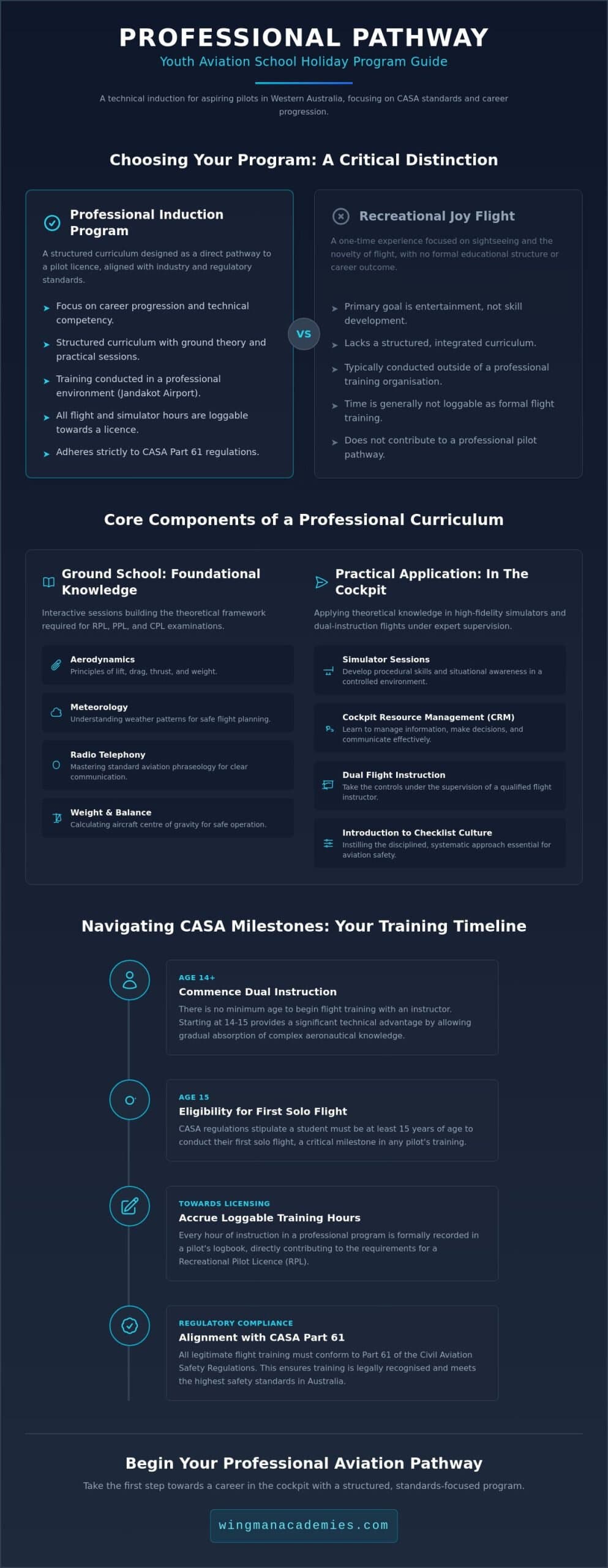
Formal entry into a professional aviation school holiday program in Perth requires an understanding of the regulatory and academic benchmarks set by the industry. While students can begin receiving dual instruction and recording flight time in a logbook at any age, the Civil Aviation Safety Authority (CASA) mandates a minimum age of 15 for a student to conduct their first solo flight. Establishing a logbook during the holidays ensures that every hour of instruction is documented toward the 25 hour minimum required for a Recreational Pilot Licence (RPL).
Medical fitness is another critical prerequisite. Aspiring pilots should recognise the differences between a Class 1 medical certificate, required for a Commercial Pilot Licence (CPL), and a Class 2 certificate, which is sufficient for private operations. Undergoing an initial assessment with a Designated Aviation Medical Examiner (DAME) early identifies any potential regulatory hurdles before significant financial investment is made. This proactive approach mirrors the discipline found in professional flight departments.
Aligning School Subjects with Aviation Goals
Aviation is a STEM heavy discipline where Mathematics and Physics serve as the engine room of technical knowledge. For students in Western Australia, focusing on ATAR English, Mathematics Methods, and Physics provides the necessary foundation for advanced navigation and aircraft systems modules. These subjects are often prerequisites for competitive airline cadetships. Students can also explore Embry-Riddle University pathways. These allow WA students to earn university credits that are recognised globally, bridging the gap between secondary school and professional flight training.
Practical Logistics for Parents
Professional programs in Perth typically follow a 3 day or 5 day intensive format at Jandakot Airport to maximise learning retention. Safety remains the absolute priority, with schools maintaining strict instructor to student ratios and comprehensive insurance coverage. To prepare for the first day, students must arrive with a professional mindset and the following items:
Enclosed footwear, preferably leather, for hangar and cockpit safety.
Sun protection, including high quality polarised sunglasses to reduce glare.
A notebook and tablet for digital charts and theory briefings.
Adopting these standards from day one ensures students are treated as junior professionals rather than tourists. If you are ready to begin this structured journey, you can contact our training department for specific enrolment dates and program availability.
The Wingman Academies Youth Aviation Advantage
Our training methodology is rooted in the practical realities of the airline industry. We provide a commitment to airline mentorship for every participant, ensuring that the standards taught during the aviation school holiday program align with global operational requirements. By maintaining small group sizes, we facilitate direct interaction between students and senior flight instructors. This high instructor-to-student ratio allows for personalised technical feedback, ensuring that foundational habits are correctly established from the very first briefing.
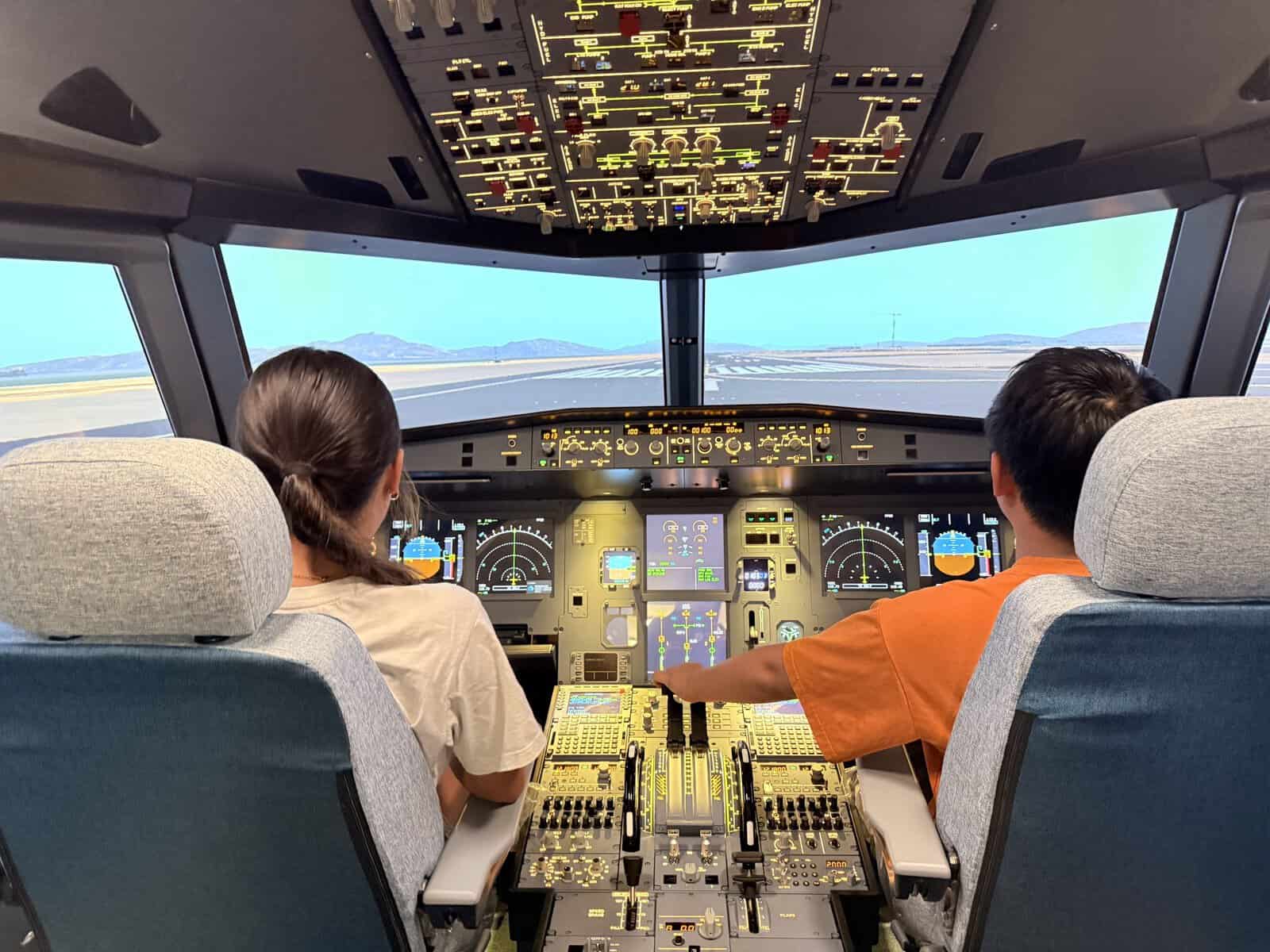
A primary differentiator of our curriculum is the inclusion of professional jet orientation. Students gain access to our A320 Simulator, providing an early introduction to the complexities of a modern glass cockpit. This experience is not merely exploratory; it is designed to demonstrate the multi-crew cooperation and automated systems management required for a Commercial Pilot Licence (CPL). By bridging the gap between basic flight and advanced simulation, we prepare students for the technical trajectory of a professional career.
Training with Purpose at Jandakot
Operating out of Jandakot Airport provides students with a distinct competitive edge. As one of the busiest general aviation hubs in the Southern Hemisphere, it demands a high level of discipline and situational awareness. Students gain immediate exposure to real-world air traffic control procedures and complex airspace management. This environment builds significant confidence. It also allows students to begin building a network of like-minded peers and professional industry contacts, which is essential for long-term career progression in Western Australia.
Next Steps: From Holiday Program to First Solo
The transition from a holiday intensive to regular training is a logical progression. We provide a structured roadmap that moves students from the initial holiday briefing into a regular weekly lesson schedule. This steady momentum is the most efficient way to achieve a First Solo flight in Perth. Once the holiday program is complete, we invite parents and students to a professional consultation to discuss specific career goals and flight hour requirements. This ensures that every student has a clear, factual plan for their future in the cockpit.
Establishing a Professional Foundation in Aviation
Establishing a disciplined foundation during secondary school is a strategic move for any aspiring aviator. By prioritising technical theory and simulator orientation over recreational joy flights, students gain a realistic understanding of the industry’s rigorous demands. This methodical approach ensures that every hour spent in an aviation school holiday program contributes directly to a recognised CASA training pathway and the commencement of a formal flight logbook. It transitions the student from a casual observer to a junior professional.
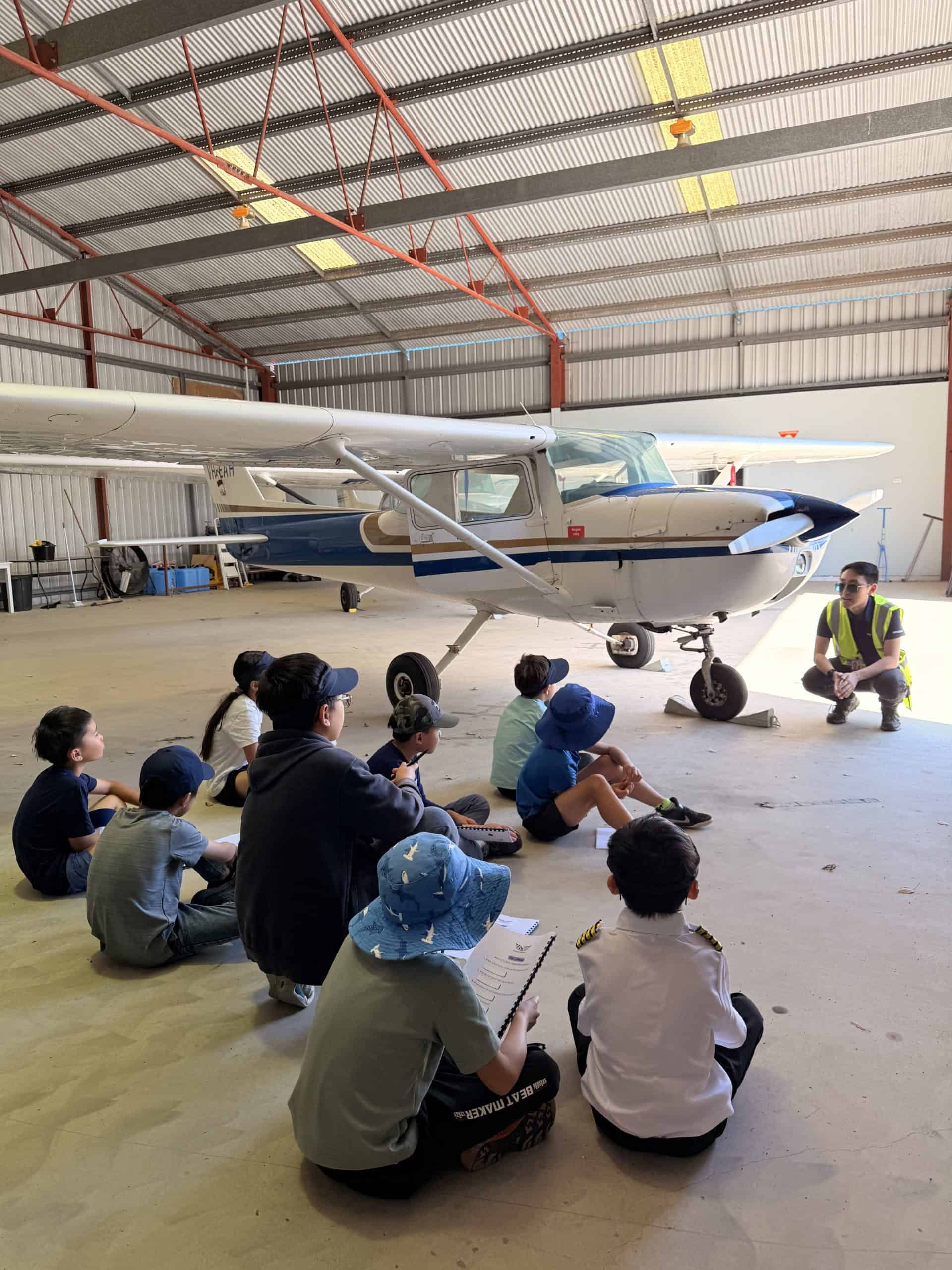
Wingman Academies provides a unique institutional environment at Jandakot Airport, led by former Cathay Pacific and Singapore Airlines captains. Students receive mentorship that bridges the gap between basic flight manoeuvres and professional airline standards, supported by our on-site fixed-base Airbus A320 simulator. This exposure to high-level technology and expert guidance fosters the precision and responsibility required for a successful transition into commercial aviation. It’s an investment in a structured career roadmap rather than a seasonal activity.
Enrol your teen in the next Wingman Academies Holiday Program to begin their professional journey under the guidance of seasoned industry experts. We’re committed to developing the skills and discipline necessary for a future in the cockpit.
Frequently Asked Questions
What is the minimum age for an aviation school holiday program in Perth?
The minimum age for an aviation school holiday program typically begins at 10 for introductory sessions and 14 for professional pathway streams. While CASA doesn’t mandate a minimum age for receiving dual flight instruction, students must be at least 15 to fly solo. Starting at 14 allows students to build technical knowledge and logbook hours before reaching the legal solo milestone.
Does my child need a CASA medical certificate to participate?
A CASA medical certificate is not required to participate in a school holiday program. However, students intending to progress toward a solo flight or a formal licence are encouraged to undergo a Class 1 or Class 2 medical assessment early. This ensures there are no underlying regulatory hurdles that could impede a professional career. Participation in ground school and dual instruction can proceed without these certificates.
Are there any academic requirements to join the youth aviation program?
There are no formal academic prerequisites for enrolment in our youth aviation programs. We do, however, recommend that students maintain a focus on ATAR Mathematics and Physics. These subjects provide the technical foundation required for advanced aerodynamics and navigation modules. Developing a disciplined study habit early is essential for successfully navigating the CASA theory examinations required for higher-level licences.
Will the hours flown during the holiday program count toward a pilot licence?
Every hour of dual instruction received during a certified aviation school holiday program counts toward the flight time requirements for an RPL or PPL. These hours must be recorded in a formal pilot logbook and certified by a CASA-qualified instructor. This allows students to make tangible progress toward their licensing goals while still in secondary school, potentially reducing the time required for post-school training.
How safe is the flight training during these programs?
Flight training is conducted under strict CASA regulations and institutional safety protocols. All aircraft used in the program undergo regular maintenance to commercial standards, and instruction is provided by experienced pilots. We maintain low instructor-to-student ratios to ensure constant supervision. Training at Jandakot Airport also ensures students operate within a highly regulated environment with professional air traffic control oversight.
What is the difference between a junior aviation camp and a teen pathway program?
Junior programs are primarily exploratory, focusing on basic aircraft components and the general interest of flight. Conversely, teen pathway programs are structured as pre-cadetship orientations. These include intensive ground theory, professional simulator sessions, and a focus on the technical competencies required for a Commercial Pilot Licence. The teen stream is designed for those committed to a long-term professional career in the cockpit. Parents considering a meaningful introduction to aviation for their child may also find value in reviewing our guide to choosing a flying lesson gift in Perth, which outlines how a Trial Introductory Flight at Jandakot Airport serves as an official first logbook entry rather than a standard joy ride.
Can international students join the Perth school holiday programs?
International students are welcome to participate in school holiday programs provided they meet the relevant visa requirements. Aviation is a global industry, and our training standards are recognised internationally. It’s important for parents to ensure that the student has the appropriate insurance and that their English proficiency is sufficient to understand technical safety briefings and radio telephony instructions.
What happens if the weather is poor during the scheduled program dates?
If weather conditions are unsuitable for safe flight, the program schedule transitions to ground-based technical training. This includes additional sessions in the Airbus A320 simulator and advanced ground theory modules. Because professional aviation requires a deep understanding of meteorology and aircraft systems, these sessions are equally valuable. Flight components are rescheduled where possible to ensure students receive their planned practical experience.
Disclaimer
Information is provided as general guidance only. Please contact Wingman Academies for current course information, pricing and CASA requirements.